 Eterna — บรรจุภัณฑ์แห่งอนาคต

Air Cushion Machine Packaging: Safe, Custom & เป็นมิตรกับสิ่งแวดล้อม
The Packaging Industry Pain Point: Why Packages Keep Arriving Damaged
Every e-commerce brand knows the sinking feeling of a customer complaint about a damaged delivery. But the scale of the problem is far bigger than most operators realize. Industry data puts packaging-related damage at roughly 11% of total shipping spend for operations that have not addressed their void fill systematically-30. That’s not just a fulfillment cost—it’s a customer trust cost.
Why does this keep happening? Three structural problems drive the majority of transit damage.
One-size-fits-all void fill. Most operations stock a limited range of bubble wrap rolls or foam peanuts and hope for the best. When a box is too large for its contents, the product shifts during transit. When the cushioning is uneven, fragile corners take the impact.
Manual inconsistency. A packer grabbing a handful of peanuts or cutting a sheet of bubble wrap by eye produces different protection levels on every order. Foam inserts require storage and slow down the packing line-30. The result is variability—and variability is the enemy of damage reduction.
Bulky materials that strain storage and labor. Pre-inflated cushions take up enormous warehouse space. When volume spikes, the whole system compounds: packers dig through bins, untangle material, and waste time that should be spent packing-30.
These aren’t minor inefficiencies. They are the difference between a profitable fulfillment operation and one that bleeds margin on returns, replacements, and reputation.
Existing Solutions—and Where They Fall Short
The market hasn’t ignored the problem. Several approaches have been tried, each with limitations.
Bubble wrap remains the default for many small operations. It’s familiar and requires only a roll and a dispenser. But the cost adds up: bubble wrap ranges from $0.08–$0.20 per package, depending on bubble size and sheet dimensions–. It also consumes substantial storage space and offers inconsistent protection when cut by hand.
Foam peanuts and loose fill provide decent cushioning, but they create mess, generate static, and escape across the packing bench. Storage is bulky, and over-packing wastes material.
Custom foam inserts deliver excellent protection for high-value items, but at $0.10–$0.25 per package, they are the most expensive option for most shippers–. They also require stocking multiple SKUs for different product sizes.
Pre-inflated air pillows offer better protection than loose fill, but they ship at a significant volume-to-value ratio—meaning you’re spending real freight dollars moving mostly empty space to your warehouse–.
Across all these options, one pattern emerges: the material you put inside the box affects shipping cost, damage rates, warehouse space utilization, pack speed, sustainability claims, and the customer’s first physical impression of your brand-33. Most traditional solutions optimize one variable at the expense of others.
 The Air Cushion Machine Advantage: On-Demand, Custom, and Cost-Effective
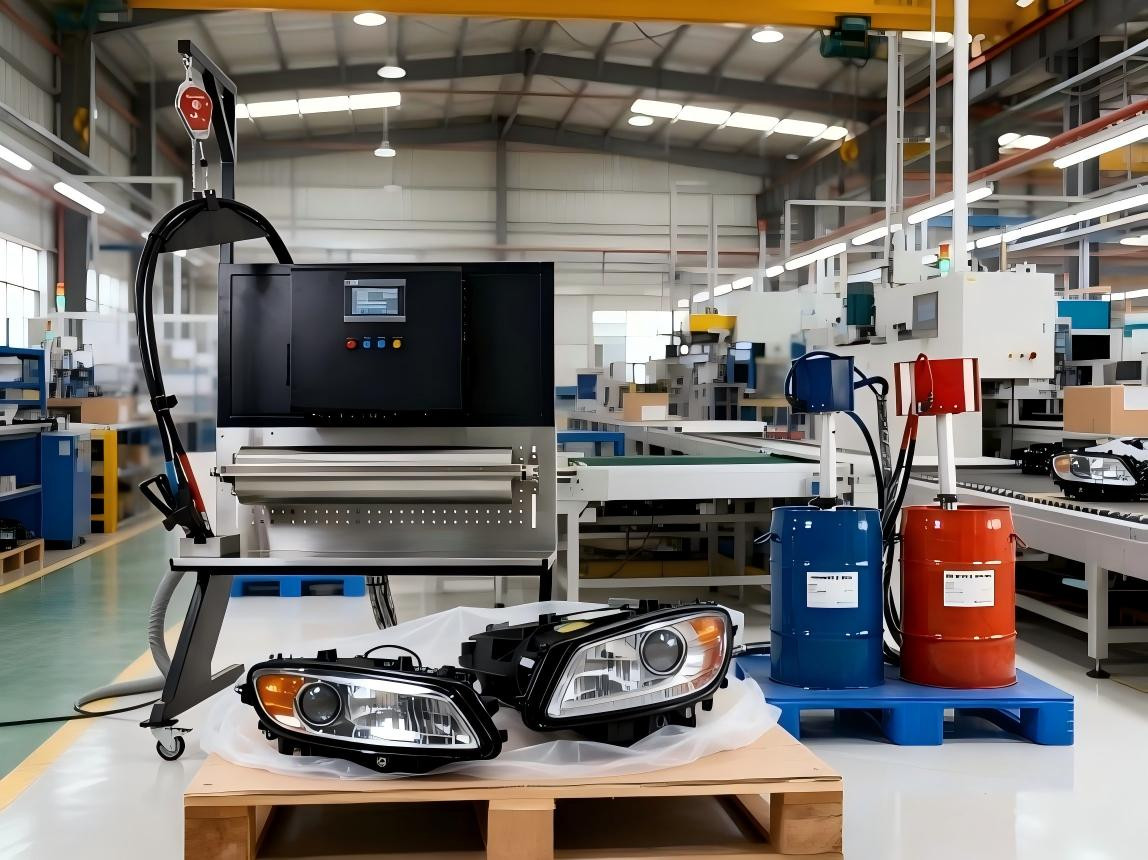
Air cushion machines—also known as air pillow packaging systems—solve the core problem by flipping the supply model. Instead of ordering pre-inflated packaging that ships bulky and takes up warehouse space, you receive compact film rolls and inflate exactly what you need, when you need it-30.
Safe Packaging, Every Order
Consistency is the foundation of damage reduction. Every cushion produced by the machine is inflated to spec, which means the protection level does not vary based on how a packer grabbed a handful of peanuts or positioned a foam insert-30. Fewer variables mean fewer damaged shipments—and fewer return authorizations and replacement costs.
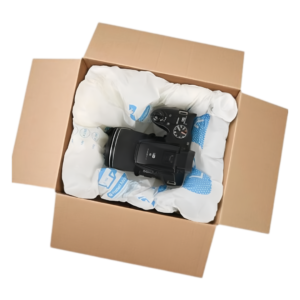
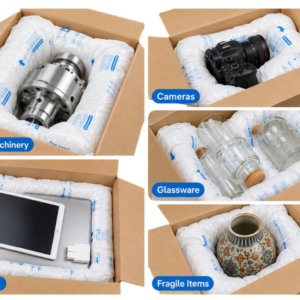
The material itself is engineered for shock absorption. Air cushions absorb shocks and vibrations, making them suitable for e-commerce, electronics, and fragile goods packaging–. With five to seven different film configurations available—standard void-fill, blocking and bracing, wrapping and cushioning—one machine can adapt to virtually any product profile-11.
Custom Packaging Without the Complexity
Traditional custom packaging means ordering multiple SKUs: different sizes of foam inserts, different widths of bubble wrap, different box dimensions. Air cushion machines eliminate this complexity. Air pillows produced in multiple sizes from the same machine give packers the flexibility to match void fill to each unique carton configuration without stocking multiple packaging SKUs-33.
For operations shipping dozens or hundreds of different products, this is a genuine operational shift. One film roll replaces an entire wall of pre-made materials. And when order profiles change—as they always do—the adjustment requires no new procurement.
Cost Savings That Compound
The cost story is compelling. Air pillow film typically costs $0.03–$0.08 per package, compared to $0.08–$0.20 for bubble wrap and $0.10–$0.25 for custom foam inserts–. But material cost is only the first layer.
Labor savings. When packers are hand-cutting foam inserts or untangling pre-inflated material, they are not packing. Facilities that have made the switch consistently report meaningful reductions in pack time per order-30. The motion with an air cushion machine is simple and repeatable: pull a strip, tear it to length, place it.
Storage footprint. A pallet of film rolls occupies a fraction of the floor space required for the equivalent volume of pre-inflated cushions or foam inserts-30. One pallet of flat film replaces 10–15 pallets of inflated bubble wrap volume-33. For fulfillment centers in high-rent markets, reclaiming that space has measurable value.
Shipping costs. Air cushions are approximately 98% air, so parcels are lighter and dimensional-weight charges drop-35. Combined with packaging optimization that typically saves businesses 15–20% on shipping costs, the ROI on an entry-level air cushion machine can be measured in weeks, not years–.
The Mini Pak’r Benchmark
Among compact systems, the Mini Pak’R stands as a proven benchmark. It operates at speeds up to 7.5 เมตรต่อหนึ่งนาที, measures just 36cm × 33cm × 27cm, and weighs only 6kg-11. That footprint fits almost anywhere—a compact pack station, a ship-from-store counter, or a small business packing bench-11.
The Mini Pak’R V3 adds RFID technology that automatically selects the correct seal temperature, airflow, and pressure seal for each film, making operation essentially plug-and-play-12. With over 20 years of proven field performance, the reliability record is established-12.
Eco-Friendly by Design
Air cushions are 99% air and 1% material—it genuinely doesn’t get much greener than packing with air-31. The films are lightweight, recyclable, and available in options made from 50% or higher recycled content. Mini Pak’R Renew films are made with a minimum of 30% post-consumer recycled content, and Renew Zero films are produced with 100% fossil fuel-free content-12.
This isn’t just a marketing angle. With the EU Packaging and Packaging Waste Regulation (PPWR) now in force, all packaging must be recyclable in an economically viable way by 2030, and the minimum percentage of recycled material in plastic packaging must reach at least 35% by 2030-21. Air cushion systems that use recycled-content films are positioned to meet these requirements without re-engineering your packaging line.
The Future of Air Cushion Packaging: Lighter, โซลูชันการบรรจุที่ชาญฉลาด, Greener
The air cushion packaging market is projected to grow from USD 4.88 billion in 2025 to USD 6.95 billion by 2031, at a CAGR of 6.07%–. That growth is driven by forces that are only accelerating.
Regulatory pressure will intensify. The PPWR’s waste prevention targets call for a 5% reduction by 2030, 10% by 2035, และ 15% by 2040 compared to 2018 levels-20. The empty space threshold for e-commerce packaging is capped at 50%-20. These aren’t suggestions—they are compliance requirements. Air cushion systems that produce on-demand, precisely sized void fill are directly aligned with this regulatory direction.
Material innovation is accelerating. Recyclable polyethylene films, bio-based content, and mono-material designs are gaining attention across the industry–. DHL predicts that businesses will move away from plastic packaging toward paper-based and biodegradable alternatives, with bio-based materials like polylactic acid (PLA) and mushroom-based packaging entering the mainstream-40.
Smart technology is entering the pack station. RFID film recognition is already standard on premium machines like the Mini Pak’R V3. The next wave includes artificial intelligence influencing air cushion packaging through smarter design, quality control, and warehouse automation–. Closed-loop manufacturing models—where packaging materials are recovered, recycled, and returned to the production cycle—are moving from concept to commercial reality–.
The shift away from single-use bulk materials will continue. As circular packaging gains momentum, operations that still rely on pre-made, bulky void fill will face both cost and compliance disadvantages-40.
Conclusion
Damaged packages aren’t inevitable. They are the result of packaging systems that weren’t designed for the realities of modern e-commerce: variable order profiles, volatile volume, margin pressure, and tightening environmental regulation.
An air cushion machine solves the problem at its source. It produces protection on demand, matches cushioning to each carton configuration, eliminates the storage burden of pre-inflated materials, and does so with films that are lightweight, recyclable, and increasingly made from recycled content.
The savings show up in material cost per package, labor time per order, freight weight, and warehouse space. The protection shows up in fewer damage claims and lower return rates. And the compliance story shows up in every shipment that uses less material, less air, and less waste.
For operations that ship fragile or high-value items—or simply ship enough volume that packaging efficiency matters—the question is no longer whether to adopt on-demand air cushion packaging. It’s how quickly the savings can start compounding.